Canada’s Food Price Report 2026: What a Family of Four Will Really Spend
Quick Answer
How much will a family of four spend on food in Canada in 2026? Canada’s Food Price Report 2026 from Dalhousie University forecasts about $17,572 for a family of four, up nearly $1,000 from 2025, or roughly $1,464 a month.
Will grocery prices come back down? No credible forecaster expects a return to pre-pandemic prices. The realistic outlook is slower growth and eventual stabilization, not a reversal.
Why are food prices still so high? Several pressures hit at once (a small cattle herd, a weaker dollar, labour shortages, trade disruptions, and climate). For the full breakdown of causes, see why groceries are so expensive in Canada.
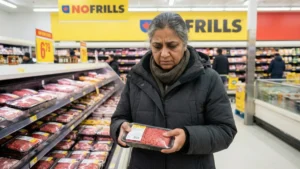
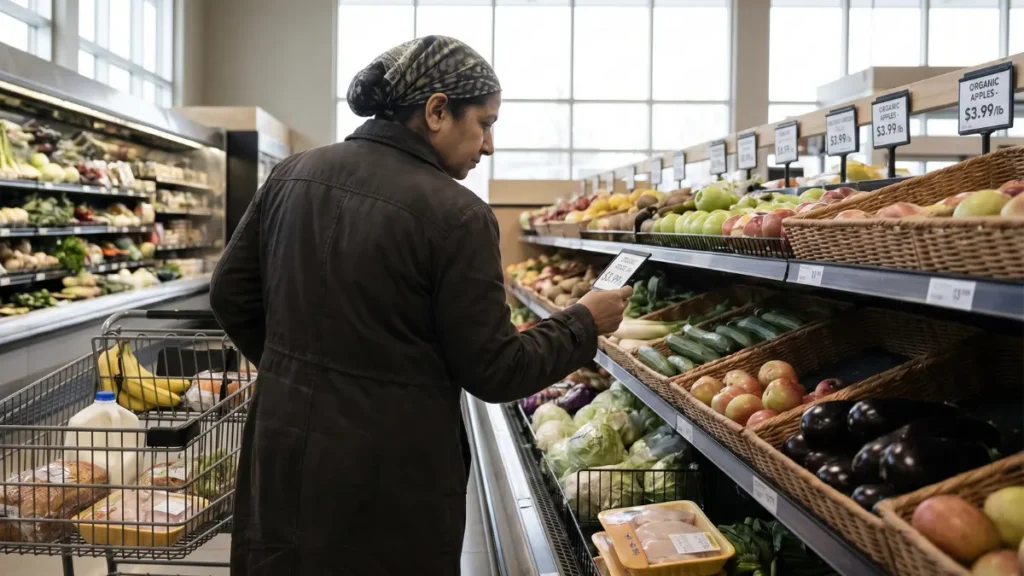
Nadia stands in the produce aisle of a Hamilton grocery store on a Saturday morning, holding a bag of red grapes. The sticker says $8.49. She puts them back. She doesn’t even check for a better option. She just moves on to the bananas, which are still reasonable, and drops two bunches into her cart alongside the store-brand cereal and the chicken thighs she switched to months ago when the breast price crossed $18 a kilo.
This is what grocery shopping feels like now in the GTA and across most of Canada. Not a crisis in any dramatic sense. Just a quiet, weekly erosion of what used to feel normal.
Food Price Trends in Canada, 2021 to 2026
| Category | 5-Year Rise (2021–2026) | 2026 Forecast Outlook |
| Overall Groceries | +27% | Climbing (approx. 5%) |
| Beef & Meat | +20% | Highest Pressure (5-7%) |
| Dairy & Eggs | +15% | Stable but Elevated |
| Annual Family Cost | $17,572 | ↑ About $1,000 vs 2025 |
This is the reality behind what people are feeling at the checkout.
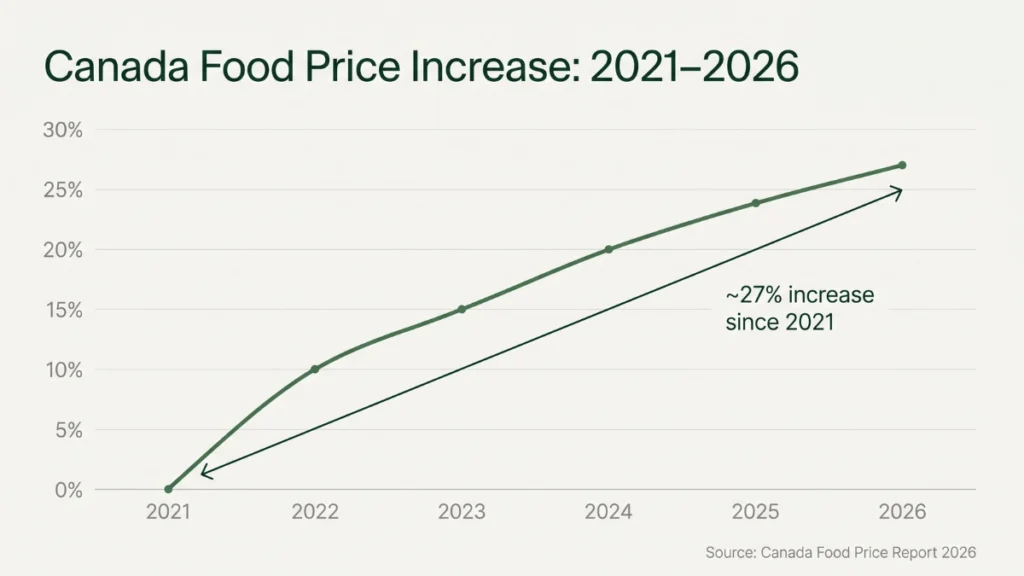
Food prices in Canada are high because multiple cost pressures, from supply shortages to labour and transportation, have increased at the same time, pushing up prices across nearly every grocery category. With grocery prices now 27% higher than five years ago, a family of four can expect to spend roughly $17,572 on food in 2026.
If you’ve been wondering why are food prices so high in Canada, the short answer is that several cost pressures hit at the same time and none of them have fully let up. Grocery prices are roughly 27% higher than they were five years ago, according to the most recent Canada’s Food Price Report from Dalhousie University. That’s not one bad year. That’s a new floor, and it’s showing up in every aisle, from dairy to canned goods to the freezer section. The rate of inflation has slowed from its peak, but the prices themselves haven’t come back down. They’ve just stopped climbing as fast.
For a family of four, the forecast spending on food in 2026 is around $17,572. That’s nearly $1,000 more than last year. And last year was already a stretch for most households.
The Checkout Doesn’t Match the Headlines
There’s a strange gap between what official reports say and what you feel when you’re standing at the checkout.
Headline inflation moved around through 2026, dipping early in the year before climbing back to 3.2% by May. Either way, food outpaced it. Food purchased from stores rose 4.3% year over year in May 2026, and it has run ahead of the headline rate for 16 straight months, according to Statistics Canada. Meat was higher still, at 5 to 7 percent above the year before.
The Bank of Canada published a detailed breakdown earlier this year showing that since 2022, grocery prices have risen by about 22%, while other consumer prices went up by 13%. Food has outpaced nearly everything else in the basket.
For Nadia, those numbers don’t land as percentages. They land as a feeling at the checkout: the moment when you mentally tally your cart and realize you’ve already blown past your weekly number. Again.
What makes it worse is that every category moved at once. Beef. Chicken. Dairy. Produce. Cooking oil. Canned tomatoes. When one thing goes up, you switch. When they all go up together, there’s nowhere comfortable to land. This is part of the broader reason why groceries are expensive in Canada, not just individual price spikes.
Why Groceries Cost So Much
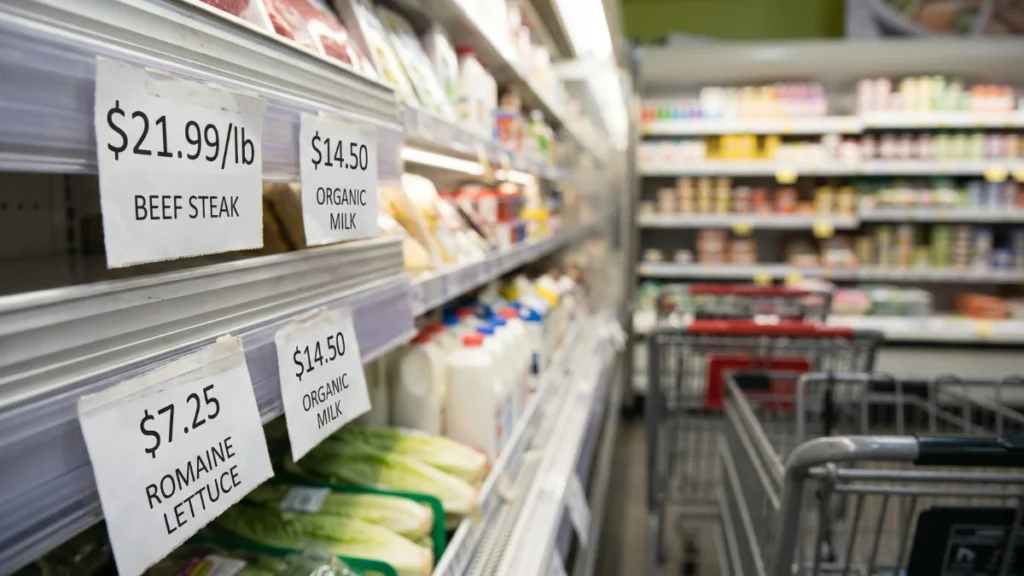
There’s no single villain here, which is part of what makes this so hard to push back against.
Start with beef. Canada’s cattle herd shrank to its smallest size since the late 1980s by early 2025, according to Statistics Canada’s livestock estimates. The herd posted its first year-over-year increase in early 2026, but years of contraction have already pushed up beef prices in Canada. Years of drought across Western Canada drove up feed costs, and ranchers culled herds they couldn’t afford to keep.
Retail beef prices are now more than 20% above their five-year average, and the squeeze is expected to last into 2027 at the earliest. The herd has started to recover, with beef heifers for breeding up 4.8% and beef cows up 1.9% as of January 2026, according to Statistics Canada. But rebuilding takes years, and heifer retention means less beef reaching shelves in the short term.
So people switch to chicken, but rising protein prices in Canada mean even alternatives aren’t as affordable as they used to be. Demand rises, domestic production hits its ceiling, and chicken prices start climbing too. The Food Price Report flagged this specifically: chicken costs are set to jump in 2026, partly because beef already priced so many families out.
Then there’s the loonie. A weaker dollar makes everything we import more expensive, from fresh fruits and vegetables to packaged goods that rely on imported ingredients or packaging. Canada imports a lot of its food, and when the dollar dips while global commodity prices hold firm, the shelf price goes up even if nothing changed at the farm down the road.
Labour shortages in agriculture and food processing add another layer. The federal government tightened the Temporary Foreign Worker Program, and whatever the policy reasons, the effect on food costs is real. Fewer workers means higher operating costs, and those costs get passed along to the person filling a cart.
And then there are the tariffs. In March 2025, both the U.S. and Canada imposed tariffs and counter-tariffs on each other’s goods. Canada removed most of its retaliatory tariffs in September, but the effects rippled through supply chains for months. Some of those price bumps never reversed.
Nadia doesn’t track any of this by category. She just knows the cart that used to cost $160 now costs closer to $210, and nothing in it has changed.
The issue isn’t just that food is more expensive. It’s that almost every category has become more expensive at the same time
Five Years of Stacking Up
What makes 2026 feel so heavy is the accumulation.
Five years of rising prices, stacked on top of each other, mean that even a “moderate” year of 4% to 6% food inflation is landing on a base that was already stretched well past pre-pandemic norms. A $15 block of cheese was $11 three years ago. A $7 can of olive oil was $4.50. These aren’t special items. They’re the backbone of a week’s cooking, and they’ve all quietly reset upward with no sign of going back.
If you break food inflation down by category, the imbalance becomes clearer.
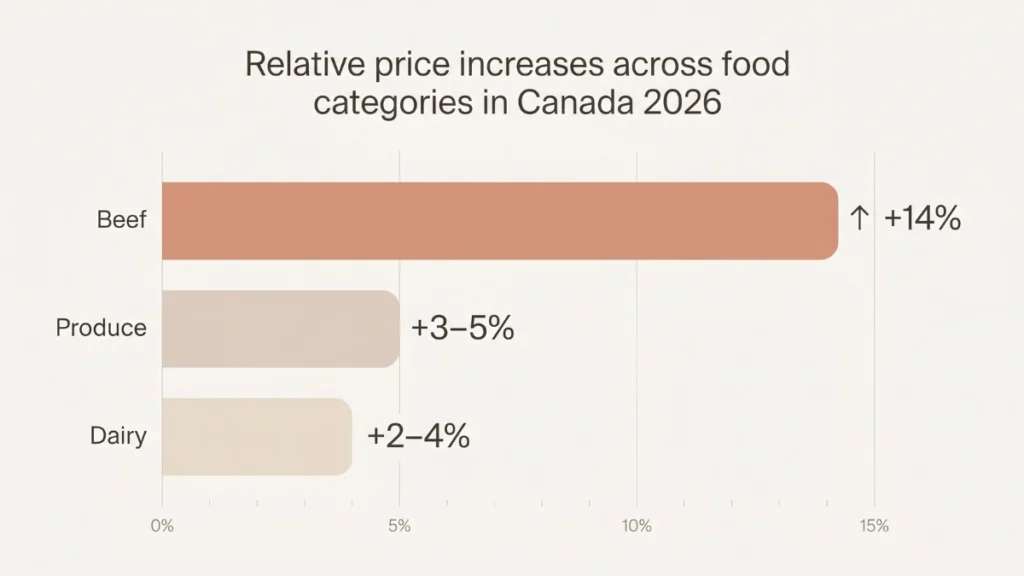
| Category | 2026 increase (year over year) | Main driver |
|---|---|---|
| Beef | About +14% | Smallest cattle herd since the 1980s |
| Chicken and poultry | Rising | Demand shifting off beef |
| Produce | +3% to 5% | Weather, transport, weaker loonie |
| Dairy and eggs | +2% to 4% | Supply management, feed costs |
| Packaged and imported goods | Moves with the loonie | Import reliance, weaker dollar |
And the pressure doesn’t hit evenly. Meat and dairy are produced largely in Canada, so they’re sensitive to domestic issues like feed costs and wages. Packaged goods lean on imports, so they move with the dollar. Produce swings with weather and global supply. The pressure isn’t coming from one category. It’s coming from all of them at once. It becomes something you react to.
Nearly one in four people in Canada live in a food-insecure household, approximately 9.8 million people including 2.4 million children in 2025, according to Statistics Canada’s Canadian Income Survey data analysed by PROOF.
Among the lowest-income families, food and shelter costs consume nearly all available income, leaving little room for anything else and pushing many households into debt just to cover the basics.
This isn’t limited to people on social assistance. More than half of all food-insecure households in Canada are working households. People with steady jobs and regular paycheques who still can’t make the numbers add up by month’s end.
Which provinces have the highest food prices in 2026?
Where you live changes what you pay, though less than most people expect. Canada’s Food Price Report 2026 flags Alberta, Ontario, Quebec, New Brunswick, and Nova Scotia for above-average food price increases this year, while British Columbia, Manitoba, and Saskatchewan are forecast to see more moderate pressure. No province escapes the increase. Some households just feel it harder depending on local grocery competition and transport costs.
| Province | 2026 outlook vs national average |
|---|---|
| Alberta | Above average |
| Ontario | Above average (grocery inflation near 6.9%) |
| Quebec | Above average |
| Nova Scotia | Above average (grocery inflation near 8.5%) |
| New Brunswick | Above average |
| British Columbia | Near average forecast, high absolute prices |
| Manitoba | Below average |
| Saskatchewan | Below average |
How much does that work out to per month for your household?
A family of four is projected to spend about $17,572 on food in 2026, which works out to roughly $1,464 a month, or close to $338 a week. Those are national averages. Your real number shifts with household size, the ages of your kids, and your province. The monthly figure is usually the one that stings, because it lands twelve times a year, not once.
What People Are Actually Doing
Nobody waits for a policy fix when the prices are already on the shelf.
Across the country, households are changing how they shop in ways that would have seemed strange five years ago. Many families have ditched name-brand products for private-label versions, and some have switched stores entirely, moving from the big-three grocery chains to discount retailers like FreshCo, Food Basics, or Giant Tiger. It’s not about loyalty anymore. It’s about what fits.
Meat is where the trade-offs show up most clearly. Families who used to buy beef weekly now treat it like an occasional thing. Chicken thighs instead of breasts. Lentils and beans making more regular appearances on the dinner table. Some people have started growing vegetables at home, not as a hobby but as a real attempt to shave dollars off their produce costs. They’re weighing the return on a bag of seed potatoes the same way they’d weigh the return on a savings account.
Nadia does something a lot of people describe doing now. She edits her list in real time while she shops. She walks in with a plan, but if the price of something is higher than she expected, it goes back on the shelf. She doesn’t use a spreadsheet. She has a rough ceiling in her head, and when the cart feels too heavy relative to what she can justify, she starts making cuts. Sometimes it’s the grapes. Sometimes it’s the cheddar. Sometimes it’s the good bread, swapped for the cheaper loaf.
This is how grocery shopping works for a lot of Canadians now. Every trip is a small negotiation between what you need, what you want, and what you can actually absorb this week, especially as the overall cost of living in Canada continues to put pressure on household budgets.
Why It Stays This Way
There are structural reasons this doesn’t ease up, and they’re worth understanding because they explain why it doesn’t feel like anyone is fixing it.
Canada’s grocery market is also highly concentrated, which limits how much price competition reaches the shelf. That structural piece is covered in depth in our guide to why groceries are so expensive in Canada
The country’s sheer size matters too. Getting food from where it’s grown to where it’s eaten costs real money: fuel, trucking, cold storage, labour. Those logistics costs haven’t come down.
Climate is quietly making things worse. Droughts on the prairies, flooding in key growing regions, supply disruptions in the countries we import from. These events are becoming more frequent, and each one adds a spike to prices that don’t fully come back down.
And then there’s the income squeeze. Wages have gone up for many Canadians, but not fast enough to keep pace with the combined weight of housing and food costs. When rent takes a bigger share of your paycheque every year, there’s just less room for groceries. That’s why the stress concentrates at the grocery store. It’s the one place where most people feel they still have some control over what they spend.
Nadia gets that. She can’t renegotiate her rent. She can’t lower her kids’ school costs. But she can put the grapes back. So she does.
The Part Nobody Talks About
There’s something about food spending that’s more draining than other bills.
You don’t renegotiate your rent every week. Your hydro bill shows up once a month and you pay it. But groceries demand constant attention. Every trip to the store is a fresh collision between what your family needs and what the budget allows. You’re making dozens of small calls under pressure, and each one is a quiet reminder that your money doesn’t go as far as it used to.
For Nadia, the hardest part isn’t any single price tag. It’s the mental load. Planning meals around what’s on sale. Saying no to a snack your kid picks up because it doesn’t fit the invisible number in your head. Scrolling past recipe videos that assume chicken breasts still cost $12 a kilo.
A lot of people carry a feeling they can’t quite name. It’s not panic. More like a low hum of tightness, a steady awareness that things are close to the edge and could get closer. That kind of weight doesn’t show up in economic data. But it shapes how you move through your week.
If that sounds familiar, you’re not imagining it. The pressure is real, and it’s not because you’re doing anything wrong.
Will Food Prices Go Down in Canada in 2026?
Probably not in any way you’d feel at the store. The honest outlook is that prices will likely level off and grow more slowly, but a real drop back to pre-pandemic levels isn’t something any credible forecaster expects.
The Bank of Canada sees food inflation staying above pre-pandemic norms for the near term. Desjardins economists have said that stabilizing prices is the realistic goal, not reversing them. The cattle cycle won’t produce meaningfully more beef before 2027 at the earliest. Chicken demand keeps rising. And the effects of a weaker dollar and ongoing supply disruptions aren’t fading fast.
What could help over time is more genuine competition in the grocery sector, especially if the new Code of Conduct starts to shift how retailers and suppliers deal with each other. A stronger loonie would ease import costs. Calmer trade relations with the U.S. would help too.
But none of that will undo the five years of increases that are already built into every price tag. The cost of groceries in Canada per month has reset to a new level, and household budgets need to find their footing around that reality.
The Math Changed, Not You
If you’ve been spending more on food and feeling like you’re getting less, you’re right. You are. That’s not a planning failure. It’s a five-year price reset across every grocery category, driven by forces that no household budget could have absorbed without strain.
When grocery costs keep absorbing more of the household budget, even long-term decisions like RRSP Canada retirement saving can start to feel harder.
Nadia still feeds her family well. She plans more carefully now. She buys what makes sense. She wastes very little. But she doesn’t pretend it’s easy, and she doesn’t pretend the rising food prices in Canada are something she can solve on her own. They’re not. They’re the result of drought, trade policy, a concentrated retail market, a weaker dollar, and a cost of living that’s been pulling in the same direction for half a decade.
The most useful thing you can do right now is stop treating the pressure as personal failure. The grocery store isn’t where your discipline gets tested. It’s where a set of large, slow-moving forces show up in the most personal, most repetitive way possible. Understanding that won’t lower the price of grapes. But it might make the next trip to the store feel a little less like something you’re losing at, and a little more like what it actually is: you, doing the best you can, in an economy that got harder for almost everyone.
Frequently Asked Questions
Why are food prices so high in Canada in 2026?
Food prices remain elevated because of several overlapping pressures: a historically small cattle herd, a weaker Canadian dollar, labour shortages in agriculture, lingering effects of trade tariffs, and climate disruptions. These hit multiple grocery categories at once, so the impact feels heavier than any single price increase would suggest.
How much does the average Canadian family spend on groceries per month?
According to Canada’s Food Price Report, a family of four is expected to spend around $17,572 on food in 2026, which works out to roughly $1,464 per month. That’s nearly $1,000 more than the year before, and the increase follows five straight years of above-normal food price growth.
Will grocery prices in Canada ever come back down?
No major forecaster expects a return to pre-pandemic price levels. The more realistic expectation is that prices will grow more slowly and eventually stabilize, but the higher base is here to stay. Stronger domestic competition and calmer trade conditions could help moderate future increases, but the cumulative rise of the past five years is unlikely to reverse.
Why is beef so expensive in Canada right now?
Canada’s cattle herd is at its lowest point since the late 1980s. Prolonged drought in Western Canada forced ranchers to shrink their herds, and rebuilding takes years. Even as some producers begin to retain heifers, that means less beef reaching the market in the short term. Prices are expected to stay elevated through at least 2027.
What can Canadian families do to manage rising food costs?
Most families aren’t making big financial changes. They’re making small adjustments, switching stores, choosing cheaper brands, and adjusting meals week by week based on prices
Disclaimer:
This article is for informational and educational purposes only and does not constitute financial, legal, tax, or investment advice. Individual circumstances vary, so please use your own judgment and consult a qualified professional when appropriate.