
Protein Prices in Canada 2026: Why They Keep Getting Worse
Quick Answer
Protein prices in Canada in 2026 feel worse because households are not only paying higher shelf prices. They are also dealing with smaller packages, convenience pricing, processed protein options, and grocery decisions that now require more comparison than before. Canada’s Food Price Report 2026 forecasts food prices to rise 4% to 6%, with the average family of four expected to spend $17,571.79 on food in 2026.
The best way to compare protein is not only by package price. A more useful method is to compare cost per gram of protein: price divided by total grams of protein. This helps explain why ground beef, whole chicken, lentils, canned fish, eggs, and whey protein can look very different once the actual protein value is calculated.
For households, the practical answer is not panic. It is discipline: compare unit prices, check package weight, reduce convenience cuts where possible, use discounts carefully, read labels on processed protein, and make sure eligible benefits are not missed. None of this removes the grocery squeeze, but it can help families make clearer choices in a year when protein has become one of the most expensive parts of the cart.
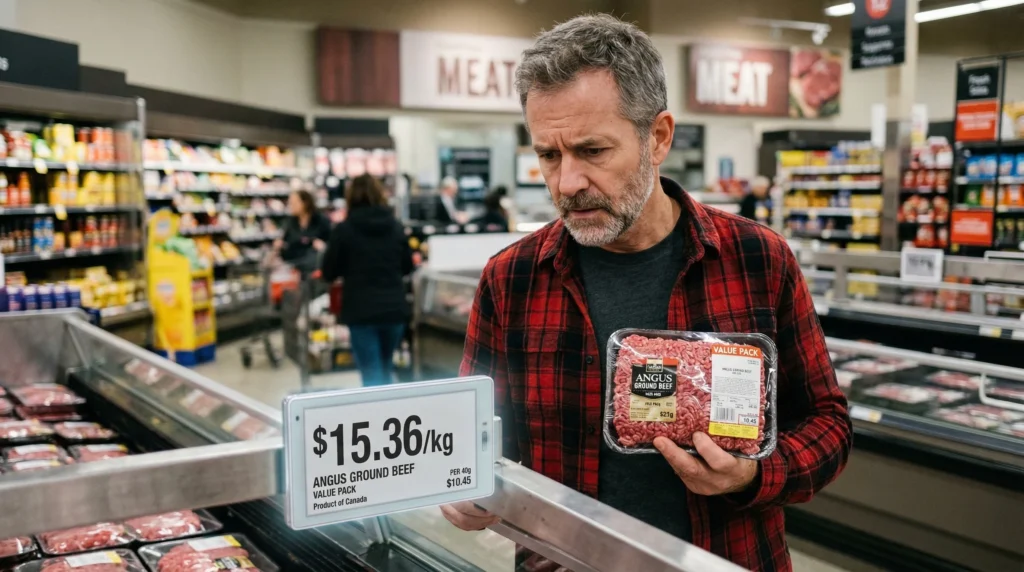
Dave Miller stood in the meat aisle of a Fortinos in Burlington, staring at a pack of lean ground beef priced at $15.36 per kilogram. For many Canadian families, that moment feels familiar. Protein is no longer just another grocery item in the weekly cart. It has become one of the biggest pressure points in the household food budget.
For many households, protein prices in Canada, 2026 have become one of the clearest examples of how everyday grocery costs are putting real pressure on the monthly budget. (For the specific math on this shift, see our latest analysis of the ground beef price per kg Canada 2026).
This is what many households are feeling in 2026: not just general inflation, but a growing gap between the cost of eating well and the reality of an ordinary paycheck, as rising food costs across Canada continue to put pressure on family budgets. When staple sources of protein keep climbing in price, families are forced to think more carefully about what they buy, how they compare value, and where convenience quietly drives up the bill.
Protein prices are also affected by freight, refrigeration, and supply-chain timing, which is why fuel costs and grocery prices do not always move together quickly.
The good news is that better decisions are possible. Once you stop comparing protein by package price alone and start comparing it by actual protein value, the picture changes quickly.
For many households, learning to cut waste, compare real value, and buy more intentionally is one of the small habits that can help you recover financially in your 50s.
A Smarter Way to Compare Protein Value
Looking only at the sticker price can be misleading. In a time of smaller pack sizes, more processed options, and convenience pricing, what matters more is how much usable protein you are actually getting for your money.
One practical way to compare foods is to look at their protein value, not just their shelf price.
Simple formula:
Protein value = Price ÷ Total grams of protein
Total grams of protein = Weight in grams × Protein percentage
protein value calculator
Monetary Leaf™
Protein Value Calculator
Compare which protein foods give you better value for your money.
This simple method helps cut through marketing noise and makes it easier to compare very different foods on the same basis.
Here is a basic comparison:
| Protein Source | Typical Unit | March 2026 Price | Estimated Protein Density | Total Protein | Cost per Gram |
|---|---|---|---|---|---|
| Ground Beef | 1 kg | $15.36 | 21% | 210g | $0.073 |
| Whole Chicken | 1 kg | $7.51 | 18% | 180g | $0.041 |
| Whey Protein | 2 kg | $59.99 | 72% | 1,440g | $0.041 |
| Lentils (Dry) | 1 kg | $3.89 | 25% | 250g | $0.015 |
| Canned Sardines | 125g | $1.99 | 25% | 31.25g | $0.063 |
This comparison will not make every decision for you, but it does show one important truth: some foods that look cheap at first glance are not always the best value, and some foods that seem expensive may still work if they deliver more protein overall.
The Convenience Premium Most Families Overlook
As prices rise, many shoppers naturally move away from beef and start looking for cheaper alternatives. But there is another trap hidden inside the poultry aisle: convenience cuts.
Pre-cut chicken breasts, trimmed pieces, marinated packs, and “family-size” trays often cost far more per kilogram than buying a whole bird or less processed cuts. What looks like a smart compromise can quietly become a high-cost habit.
That is why a whole chicken often makes more financial sense. It gives families:
- a lower price per kilogram
- cooked meat for more than one meal
- leftovers for lunches or wraps
- bones and trimmings that can be used for broth
In other words, the saving is not just at the checkout. It continues after the purchase. For families trying to stretch their grocery budget, this kind of value matters.
Why Routine Matters More Than One-Time Bargains
A lot of grocery savings do not come from one lucky deal. They come from building a consistent routine.
Discount and surplus food apps have become increasingly useful for Canadian households trying to lower food costs without sacrificing quality. These platforms can help shoppers find markdowns on meat, dairy, bread, and prepared foods that would otherwise go unsold.
Used carefully, these tools can help reduce waste and free up more of the budget for staple items. But the key is consistency. Checking once in a while is not the same as building a habit around when stores tend to post discounts and what kinds of items are worth buying.
Some practical ways families use these apps include:
- checking early for same-day markdowns on meat and produce
- looking for bread or bakery surplus in the evening
- freezing suitable items before they become waste
- using app savings to make room for higher-priority grocery purchases
The goal is not to chase random deals. The goal is to make discount buying part of a more disciplined food budget.
Watch for Shrinkflation and Pricing Errors
Another part of the problem is that many families are not just paying more. They are also getting less.
Pack sizes can shrink while prices remain the same. Unit pricing can be easy to miss. In busy stores, shelf labels and scanner prices do not always match. These small gaps may seem minor on one item, but over a month they add up.
That is why careful shoppers in 2026 need to pay attention to:
- package weight
- unit pricing
- whether “family packs” still offer genuine value
- whether the scanned price matches the shelf price
This is not about becoming obsessive. It is about staying alert in a grocery environment where small pricing changes can quietly work against the consumer.
How Food Labels Can Help You Avoid Paying for Fillers
Another practical filter in 2026 is learning to read food packaging more critically.
Canada’s front-of-package nutrition symbol rules mean many pre-packaged foods high in sodium, sugars, or saturated fat now carry a visible symbol on the front. That does not automatically make a product bad, but it can help shoppers pause before assuming that a processed protein option is a bargain.
This matters because some products that look protein-rich may include:
- added sodium
- fillers
- heavy seasoning
- binding agents
- extra fat that raises weight but not nutritional value in the way buyers may assume
A heavily processed or seasoned product may still be useful in some households, but it should not always be treated as the same value as a simpler protein source.
In many cases, raw or less processed cuts give shoppers a clearer sense of what they are actually paying for.
Government Benefits Still Matter at the Grocery Level
For many Canadian households, grocery budgeting in 2026 is not only about smarter shopping. It is also about making sure eligible benefits are not missed.
Tax-season-linked support, grocery-related relief, and broader household credits can make a real difference over the course of a year, especially for families already under pressure from rising food and housing costs.
That means one practical step is often overlooked: keeping tax filing current and accurate.
Families who qualify for support but delay filing can miss out on help they are entitled to receive. In a year where food costs remain a major burden, that is a mistake worth avoiding.
Even when benefit amounts are not large enough to solve the whole problem, they can still act as a buffer when combined with disciplined grocery decisions.
The Bigger Lesson: Grocery Discipline Beats Grocery Panic
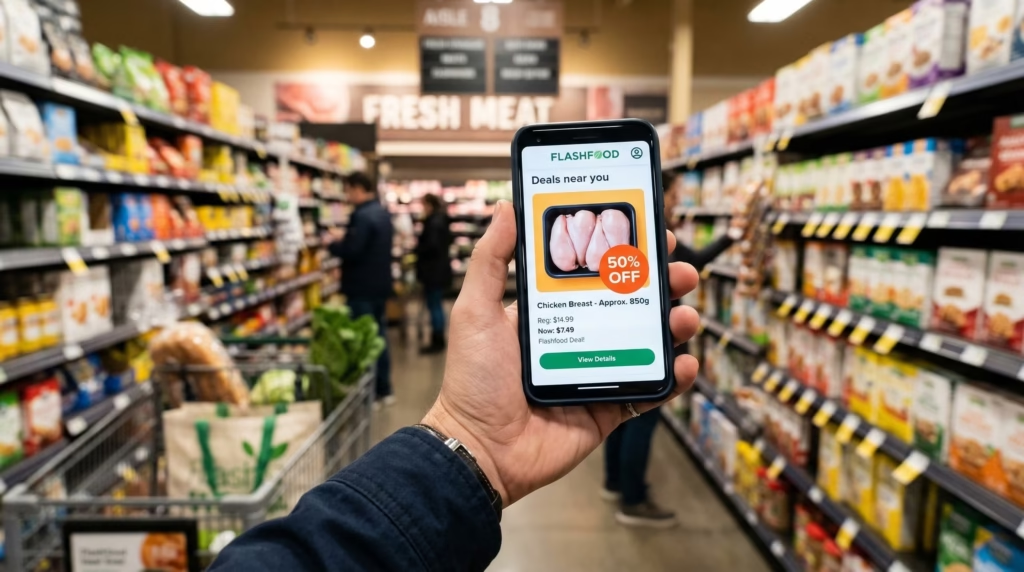
By the time Dave reached the checkout, his total was not low, but it was more intentional. He had skipped the most overpriced convenience options, compared protein by value instead of impulse, and made choices that could stretch beyond one meal.
That is really the lesson here.
In a year when protein feels expensive across Canada, families need more than vague advice to “budget better.” They need a practical system.
That system can be simple:
- compare foods by protein value, not just package price
- buy less convenience and more flexibility
- use discount apps with consistency
- pay attention to pack sizes and unit prices
- be cautious with processed products that add cost without adding much value
- stay current on tax filing and benefits
None of this removes the pressure entirely. But it does help restore some control.
10 Practical Ways to Cut Protein Costs in Canada in 2026
Here is a simpler playbook you can actually use:
Key Facts
- Key Facts: Protein Prices in Canada 2026
- Statistics Canada tracks monthly average retail prices for selected grocery products, including common protein foods such as beef, chicken, eggs, fish, legumes, and other staples.
- Canada’s Food Price Report 2026 forecasts overall food prices to rise 4% to 6%, with the average family of four expected to spend $17,571.79 on food in 2026, up to $994.63 more than the previous year.
- Canada’s Food Price Report 2026 also notes that meat rose faster than forecast in 2025, with beef seeing a sharp increase and remaining well above its five-year average.
- A protein-value comparison looks beyond sticker price by dividing the food’s price by its total grams of protein. In the article’s example, dry lentils offer a much lower cost per gram of protein than ground beef, while whole chicken and whey protein can compare differently once protein density is included.
- Health Canada’s front-of-package nutrition symbol became required for many prepackaged foods high in saturated fat, sugars, or sodium by January 1, 2026. This can help shoppers pause before assuming a processed protein item is automatically good value.
- Higher protein prices make small grocery habits matter more: checking unit prices, watching package weight, avoiding unnecessary convenience cuts, freezing usable discounts, and keeping tax filing current so eligible benefits are not missed.
Final Thought
Protein has become one of the clearest examples of how ordinary households are feeling financial pressure in 2026. What used to be a routine grocery purchase now requires more thought, more comparison, and more discipline.
That is frustrating, but it also means small changes matter more than they used to.
Families may not be able to control the wider economy, but they can control how they respond to it. And in a year like this, better grocery decisions are not a minor detail. They are part of financial survival.
Frequently Asked Questions
Why are protein prices so high in Canada in 2026?
Protein prices feel high in Canada because families are dealing with several pressures at once: higher meat prices, smaller package sizes, convenience pricing, freight and refrigeration costs, and more expensive processed options. Canada’s Food Price Report 2026 forecasts overall food prices to rise 4% to 6%, with the average family of four expected to spend $17,571.79 on food in 2026.
What is the best way to compare protein value?
The best way is to compare the cost per gram of protein, not only the package price. A simple method is: price divided by total grams of protein. This helps compare very different foods, such as ground beef, chicken, lentils, sardines, eggs, and whey protein, on the same value basis.
Is cheaper protein always better value?
Not always. A food may look cheaper by package price but provide less usable protein, more waste, or fewer meals. Another food may look expensive at first but provide more total protein or stretch across several meals. That is why comparing protein value, leftovers, cooking flexibility, and waste matters more than looking at the shelf price alone.
Are whole chickens usually better value than chicken breasts?
Often, yes. A whole chicken can provide cooked meat for more than one meal, leftovers for lunches, and bones or trimmings for broth. Chicken breasts and pre-cut pieces are convenient, but convenience cuts can cost more per kilogram and may not stretch as far in a household meal plan.
How can I lower protein costs without cutting nutrition too much?
Start by comparing unit prices and cost per gram of protein. Buy less processed cuts when possible, use whole chicken or larger flexible cuts, include lower-cost proteins like lentils, freeze discounted items before they spoil, and avoid assuming that “family-size” packs are always cheaper. The goal is not to panic-buy. It is to make protein purchases more intentional.
Can food labels help when buying protein products?
Yes, especially for processed protein foods. Health Canada’s front-of-package nutrition symbol is required for many prepackaged foods that meet or exceed set levels for saturated fat, sugars, or sodium. That symbol can help shoppers pause before assuming a processed protein item is automatically good value.
Why do processed protein foods sometimes cost more than they seem?
Processed protein foods may include added sodium, sauces, fillers, seasoning, breading, binding agents, or extra fat. These can raise the package weight or make the product look convenient, but they may not increase the actual protein value in the same way. For protein budgeting, simpler foods are often easier to compare clearly.
Should Canadian families switch completely to plant-based protein?
Not necessarily. Plant-based proteins like lentils and beans can offer excellent value, but the practical answer depends on the family’s habits, nutrition needs, cooking time, and preferences. A balanced approach may work better: use lower-cost plant proteins more often, while still buying meat, eggs, fish, or dairy more selectively.
Do grocery benefits help with protein costs in Canada?
They can help, but they usually do not remove the whole pressure. Benefits and tax-linked supports can act as a buffer for eligible households, especially when combined with disciplined grocery choices. That is why keeping tax filing current matters, because many supports depend on up-to-date tax information.
What is the main takeaway for protein prices in Canada in 2026?
The main takeaway is that protein shopping now requires more comparison than before. Families need to look beyond the package price and ask: how much protein am I actually getting, how many meals will this create, how much waste will there be, and is convenience quietly raising the cost? That kind of comparison will not erase high prices, but it can help restore some control.
Disclaimer:
This article is for informational and educational purposes only and does not constitute financial, legal, tax, or investment advice. Individual circumstances vary, so please use your own judgment and consult a qualified professional when appropriate.